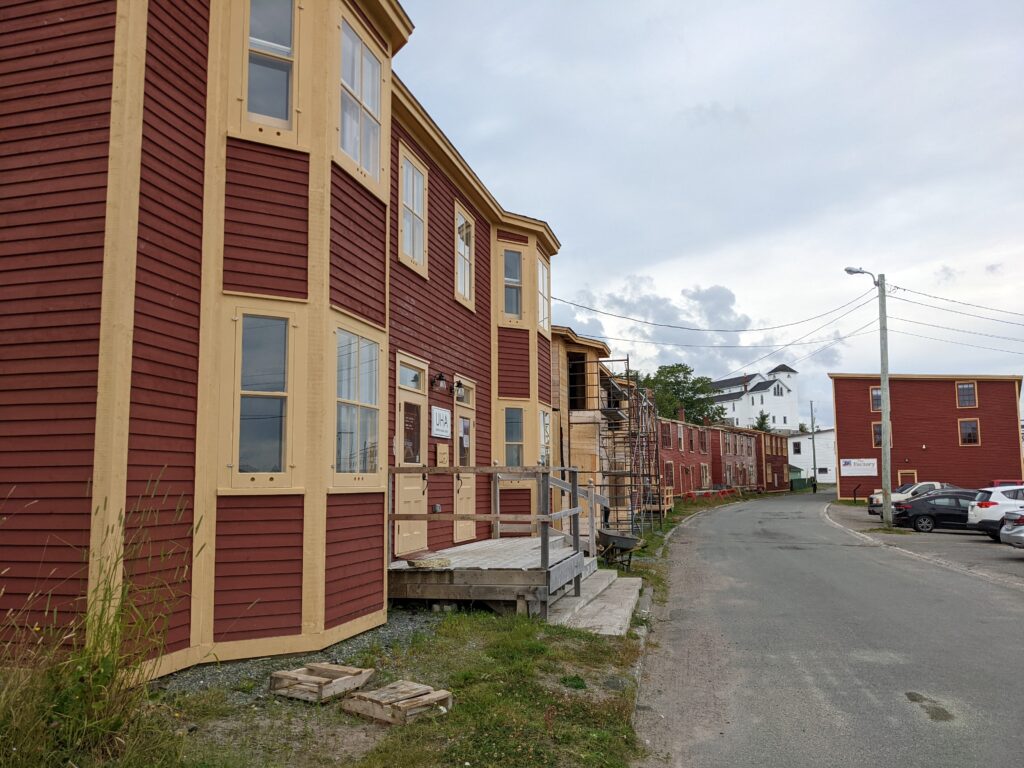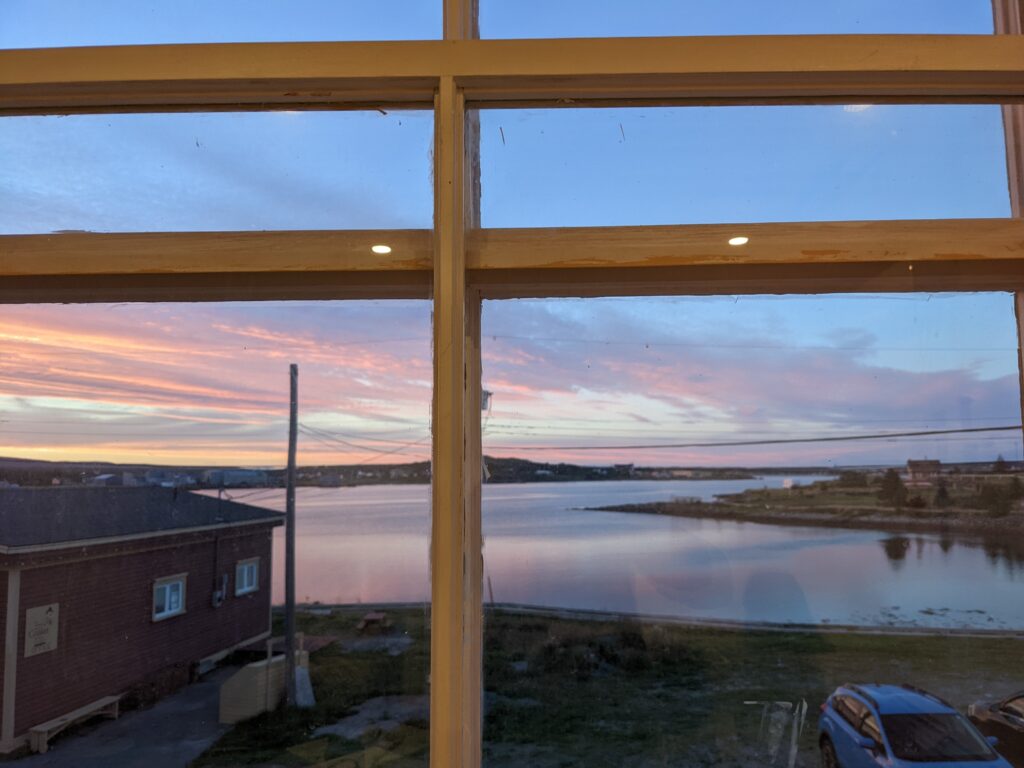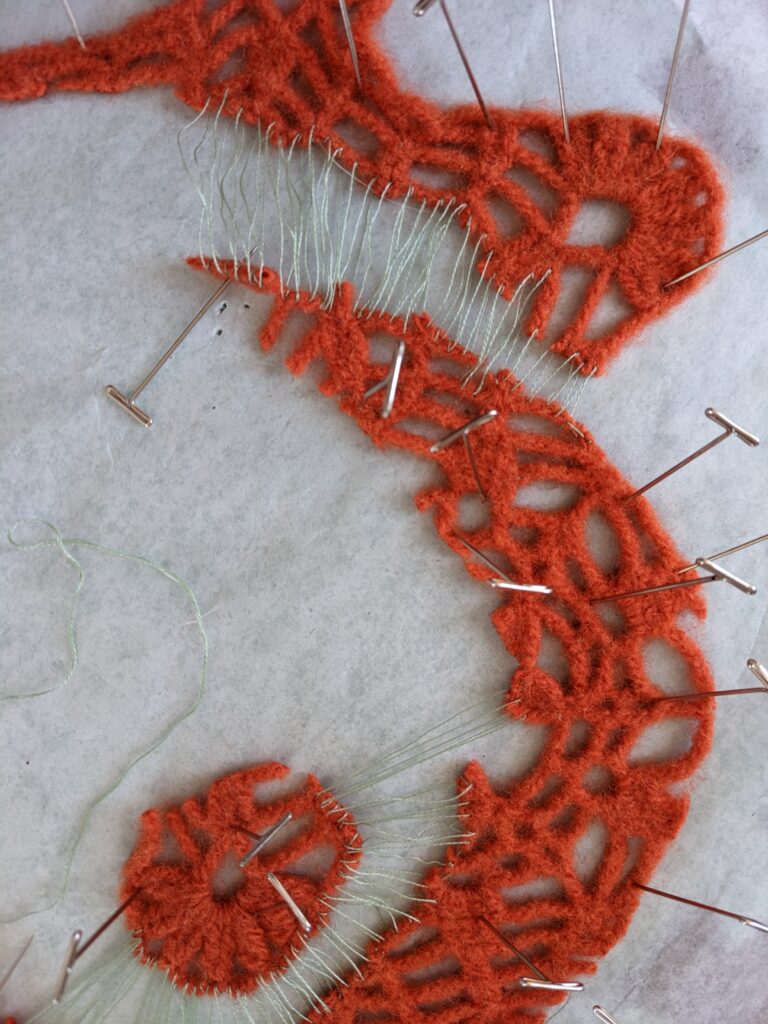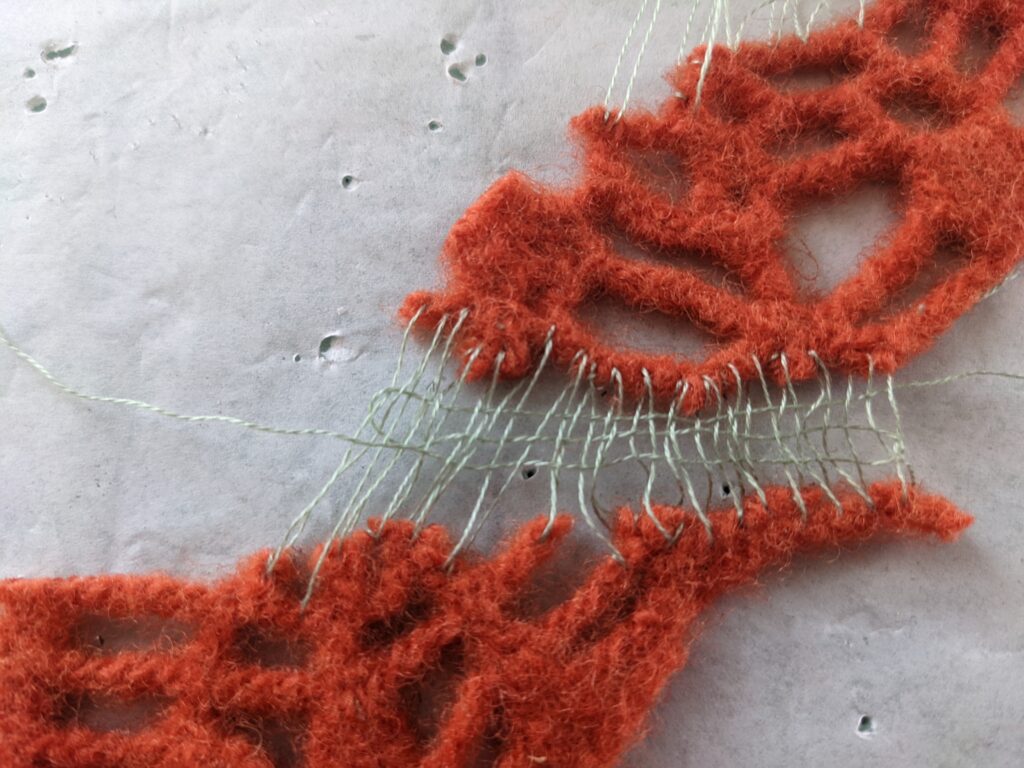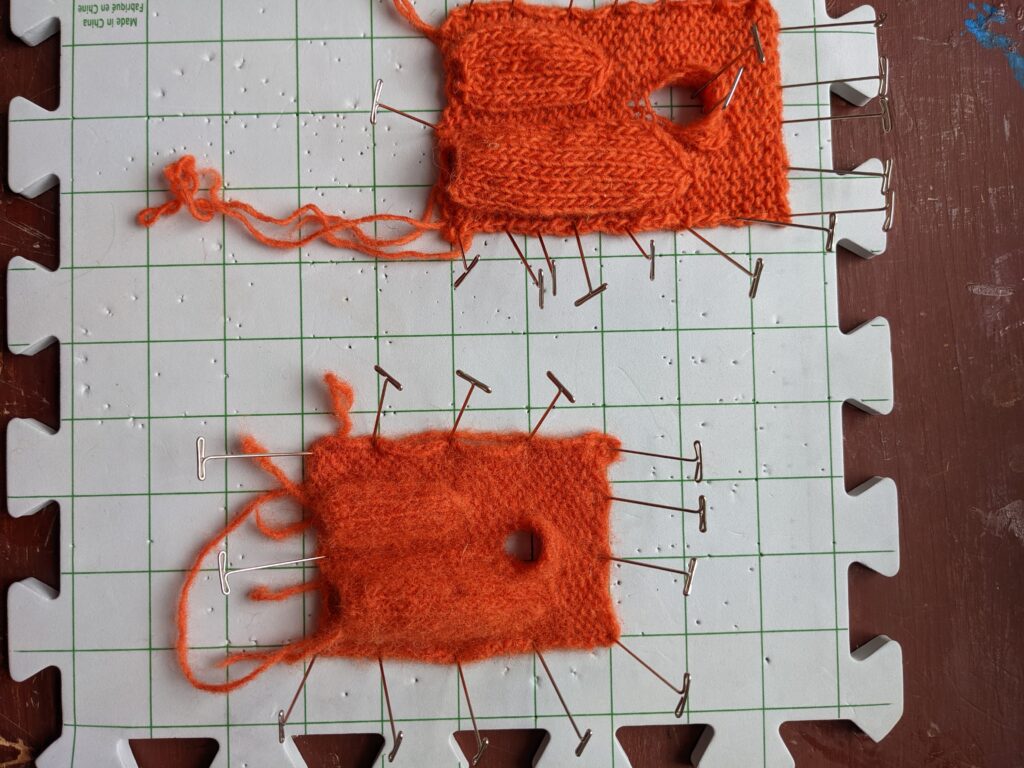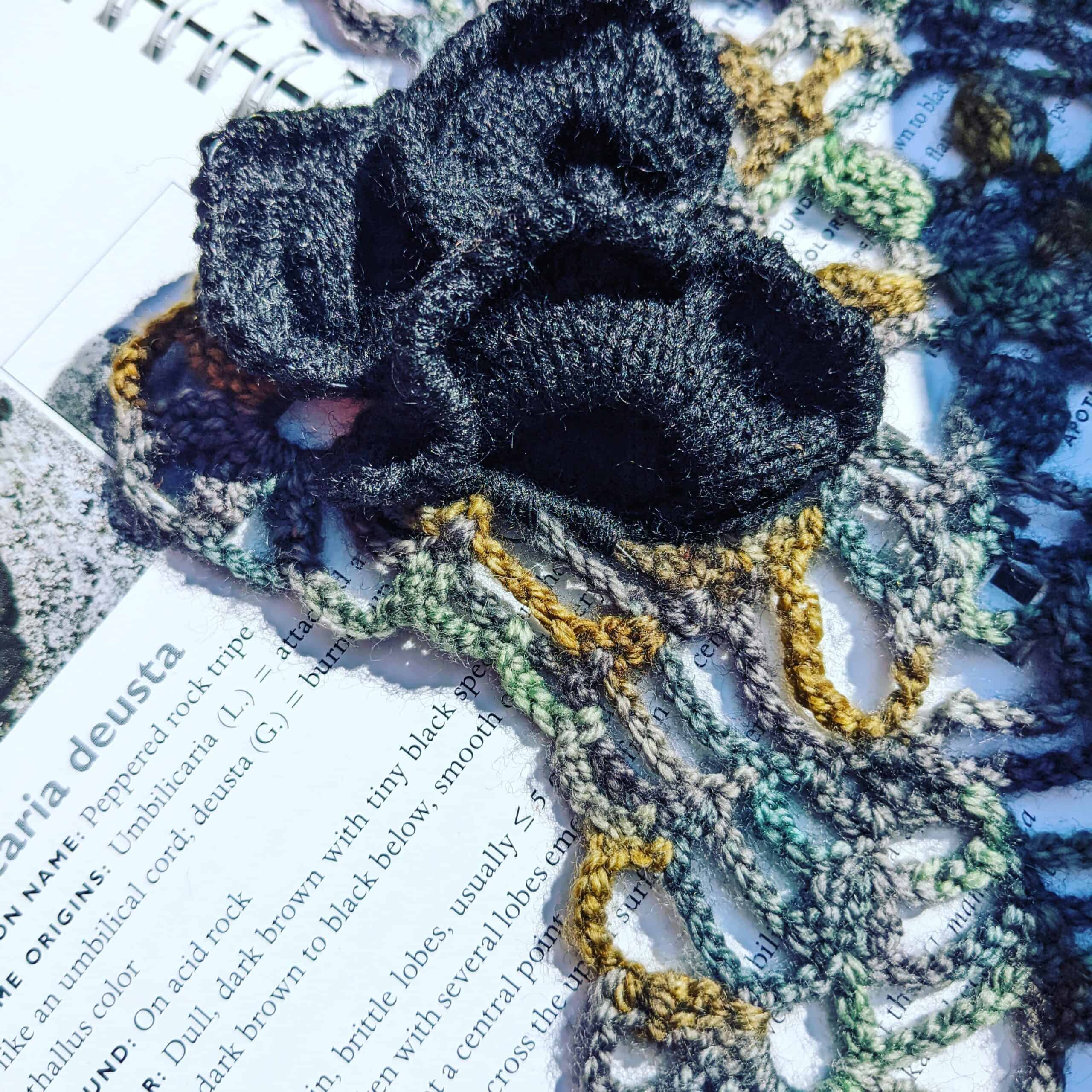
In August 2022, after a couple of years delay due ot Covid, I finally got to Union House Arts (UHA) in Port Union, Newfoundland & Labrador.
I had proposed a project on lichens and doilies and kept saving it for when I finally got there because I wanted it to be of that place.
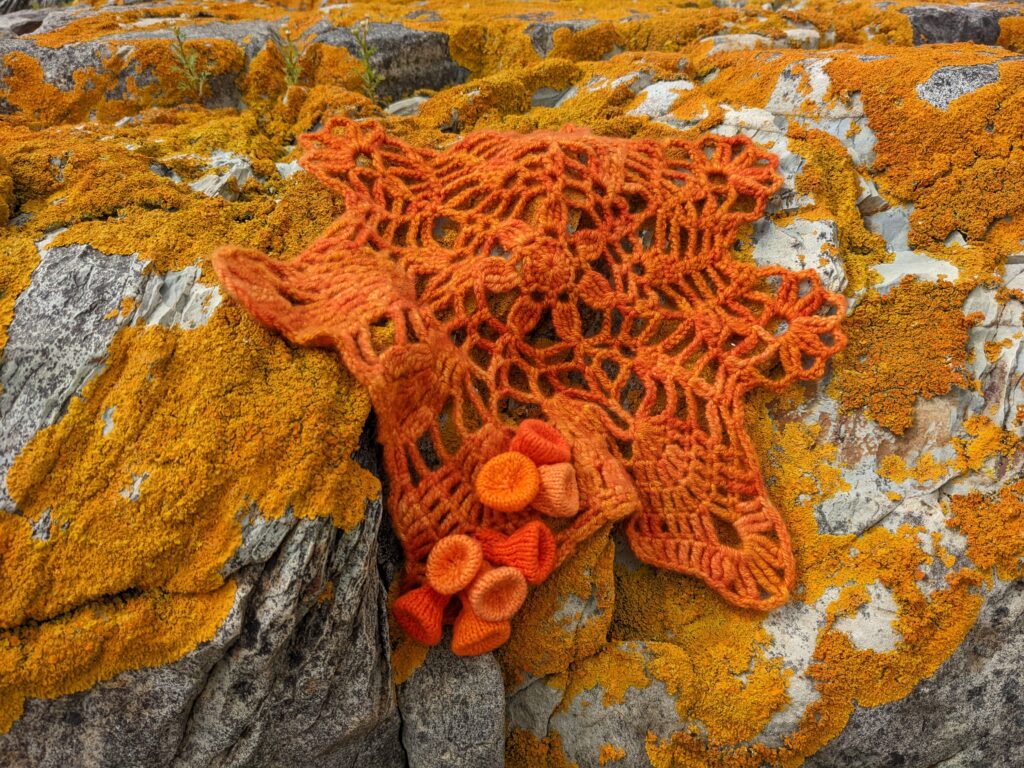
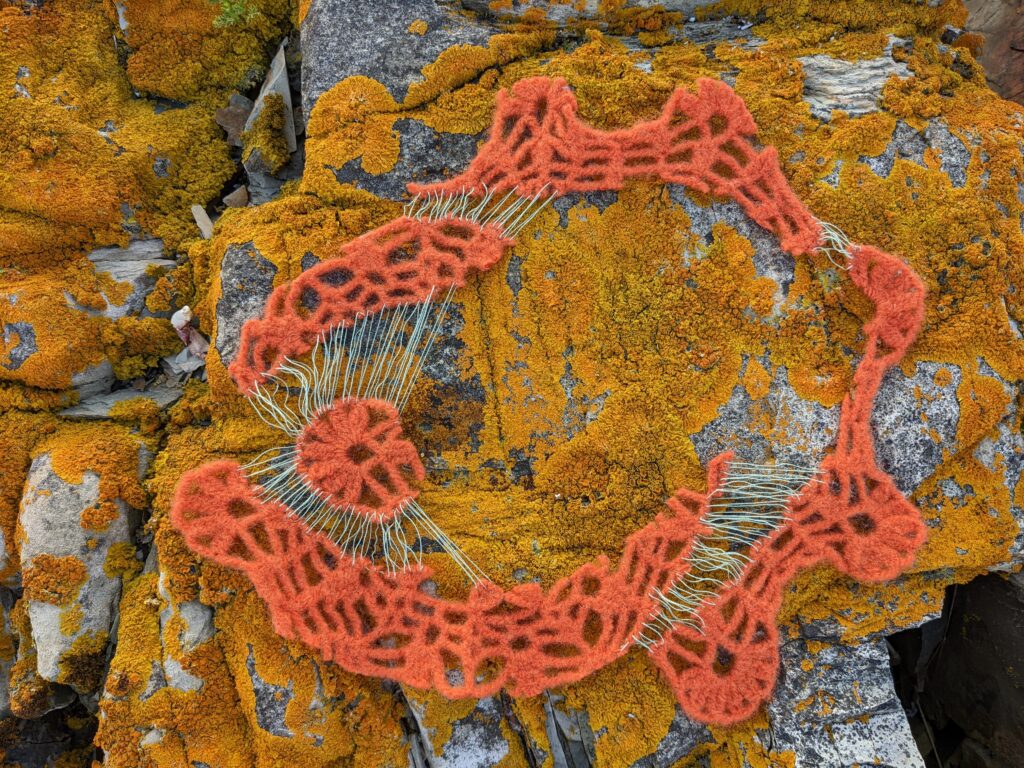
Lichens look like doilies – their shapes and intricacies, as well as how they ‘drape’ over whatever they’re attached to. Lichens look like they’re protecting a surface, as doilies originally protected furniture from damage. However, the relationship between lichens and doilies is deeper and darker. Doilies are remnants of colonial times and, thus, represent climate destruction and its impact on our environment.
Lichens play a vital role in the ecosystems that they inhabit. They provide food and shelter, as well as contributing to nutrient cycles. Lichens are vulnerable to climate changes and, due to their slow growth, with some only growing 0.5mm per year, do not adapt quickly. They are the ‘canary in the coal mine’.
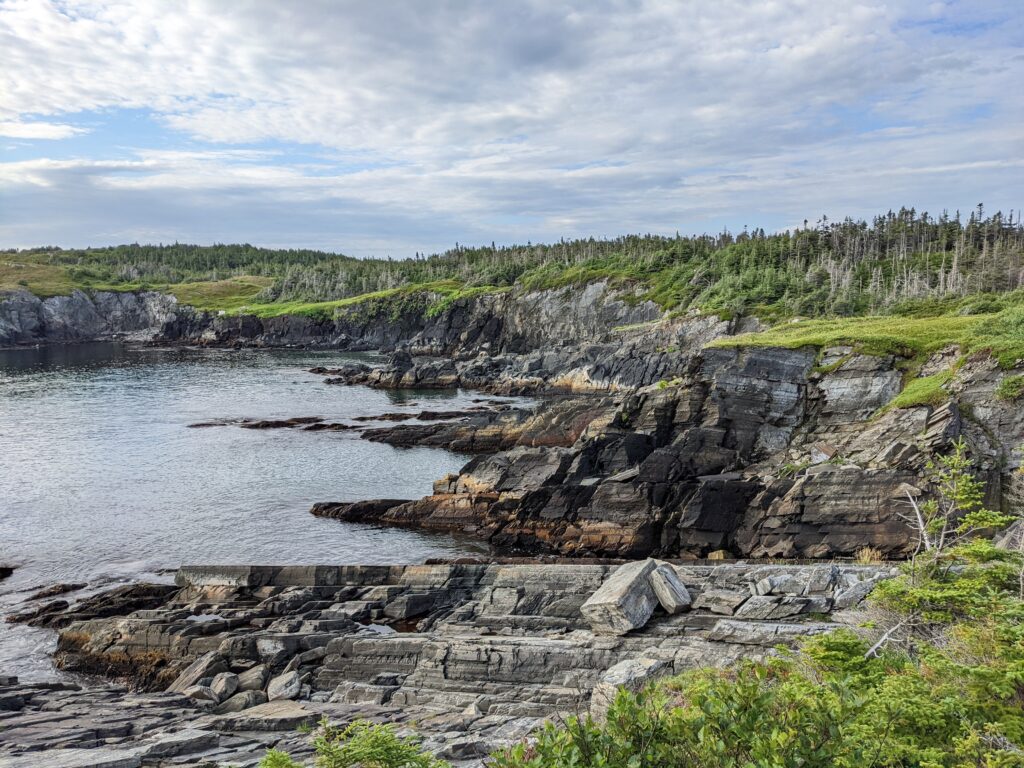
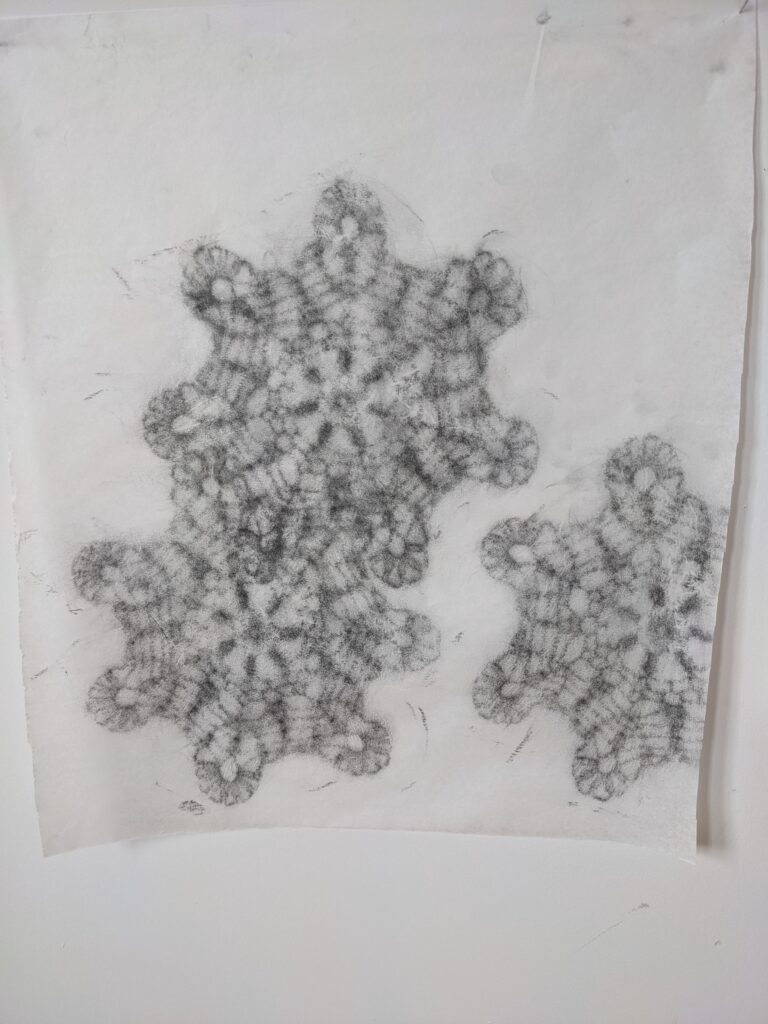
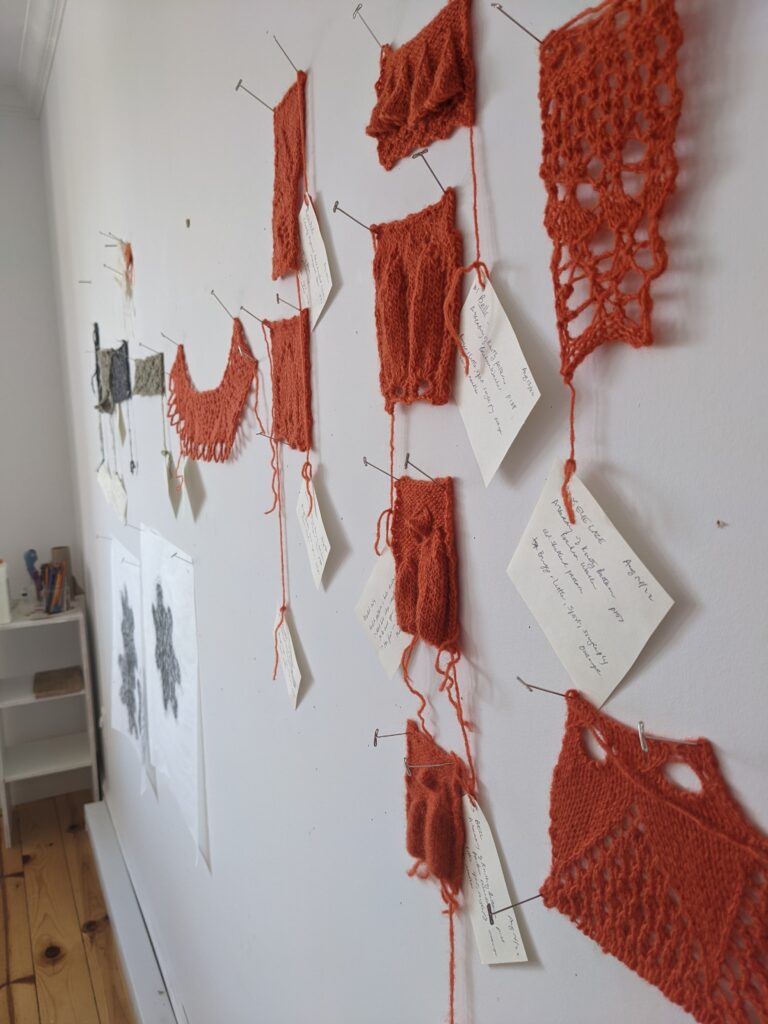
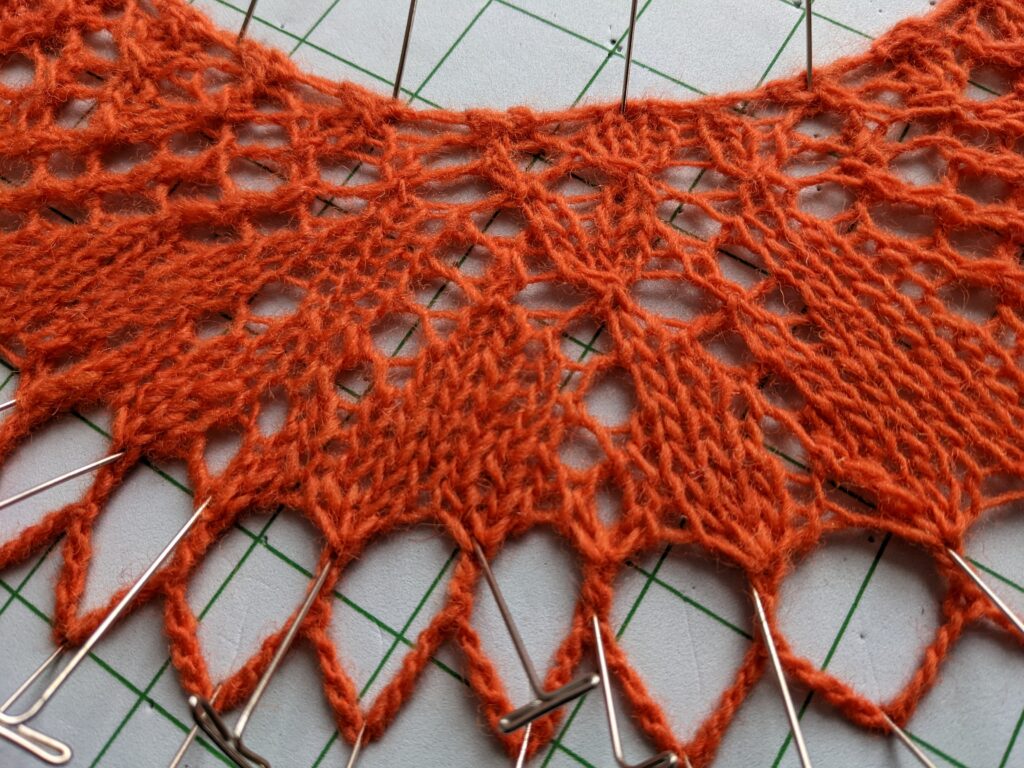
The wait was so worth the wait! There were lots of lichens in the area and I was able to walk down to the point near UHA to study them. I was not trying to replicate the lichens; I just wanted to create something that could represent the lichen x doily story.